

This implies that all current items, such as debtors, bills receivables, and stocks, will be included while calculating the gross working capital. A company’s liquidity status cannot be ascertained from its gross working capital alone. To determine the net working capital, the company’s current obligations must also be considered. Short-term financial commitments, such as those to the suppliers of raw materials and unpaid labour, are not considered.

Other Working Capital Calculations
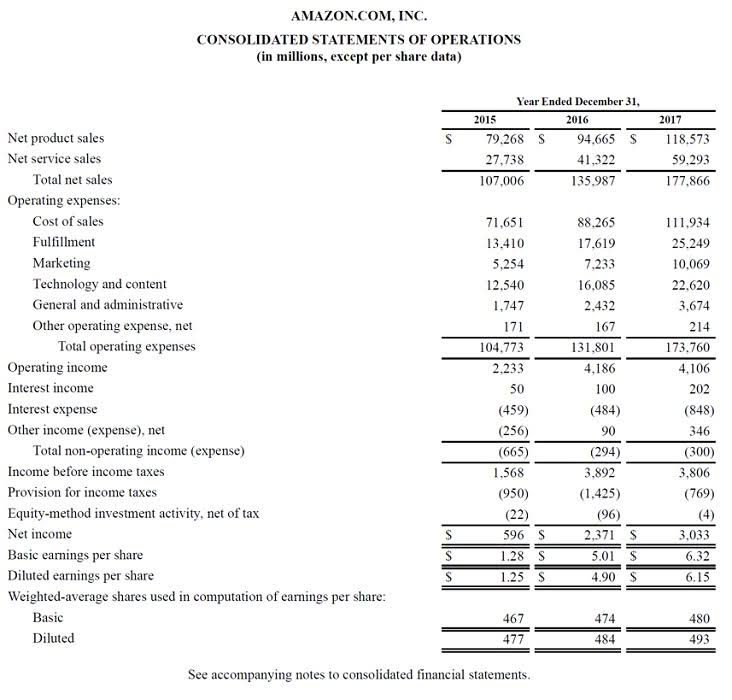
When you apply for a working capital line of credit, lenders will consider the overall health of your balance sheet, including your working capital ratio, net working capital, annual revenue and other factors. An unsecured, revolving line of credit can be an effective tool for augmenting your access to capital. Your business can draw on the line for capital whenever it’s needed and pay down the outstanding balance when business cash flow improves. A stable working capital ratio indicates good financial health, enabling a company to stay solvent. It reassures creditors and investors about cash flow the company’s ability to manage obligations and sustain operations.
Consult With Our Expert Financial Advisors
Increasing working capital may involve strategies like reducing inventory levels, speeding up collections, or delaying payments to suppliers (within reason) to free up cash. Another possible reason for a poor ratio result is when a business is self-funding a major capital investment. In this case, https://cgeducation.com.np/hiring-bookkeeper-part-time/ it has drawn down its cash reserves in anticipation of making more money in the future from its investment. Permanent working capital is the capital required to make liability payments before the company is able to convert assets or client invoice payments into cash.
How To Improve Working Capital Ratio?
- Our working capital solutions are designed to enhance the efficiency of your day-to-day business operations and improve your overall cash flow.
- A company is said to have positive working capital if its current assets exceed its current liabilities.
- Financial ratios are calculations that compare two or more figures from a company’s financial statements to measure performance and financial health.
- Shaun Conrad is a Certified Public Accountant and CPA exam expert with a passion for teaching.
- Additionally, businesses can accelerate receivables collection by offering discounts for early payments, implementing automated collection systems, and closely monitoring accounts receivable.
- If you can cover short-term bills and fund growth internally, it’s a sign of positive working capital and that the short-term health of your business is solid.
Current assets include inventory, trade receivables, short-term loans & advances, cash equivalents, and current investments. Trade payables, short-term loans, short-term provisions, and other current obligations are examples of current liabilities. Financial ratio analysis is used by a company’s external and internal stakeholders to assess financial health. External users include investors, equity research analysts, lenders, and creditors. Internal users, on the other hand, comprise management and corporate finance teams. Efficiency ratios measure how effectively a business uses its assets and manages its operations to generate sales.
- Imagine that in addition to buying too much inventory, the retailer is lenient with payment terms to its own customers (perhaps to stand out from the competition).
- Working capital and net working capital often refer to the same thing, namely the money available after subtracting current liabilities from current assets.
- However, this can be confusing since not all current assets and liabilities are tied to operations.
- People hear it in board meetings, banker calls, or late night accounting chats, but very few slow down to really unpack it.
LMN Corporation’s management decided to undergo a series of infrastructural developments. However, it came to light much later that the company did not have the desired amount of funds at its disposal for such an extensive expansion. Now that we understand the basics, formula, and related factors of working capital ratio analysis, let us apply the theoretical knowledge to practical application through the examples below.

Accounts

It is the difference between a company’s current assets and current liabilities. Essentially, it shows whether a company has enough assets to cover its short-term debts and working capital ratio obligations. The working capital formula subtracts your current liabilities (what you owe) from your current assets (what you have) in order to measure available funds for operations and growth. A positive number means you have enough cash to cover short-term expenses and debts, whereas a negative number means you’re struggling to make ends meet. This fund is estimated by deducting all current liabilities from the current assets that the business has. The liabilities include the short-term debts or accounts payable and current assets include the accounts receivable, cash, inventory and so on, that can be easily converted to cash.
Payments
This calculation gives you a firm understanding what percentage a firm’s current assets are of its current liabilities. Working capital is the measure of a business’s short-term liquidity and its ability to cover immediate financial obligations. In an ideal world, you would sell your goods, get your revenue from those sales and then pay your bills.
- In this perfect storm, the retailer doesn’t have the funds to replenish the inventory flying off the shelves because it hasn’t collected enough cash from customers.
- Three important liquidity ratios—quick, current and cash—evaluate working capital to provide comprehensive insights into a business’s financial stability.
- Items can become outdated or even get stolen, which means your working capital might not be as strong as you think.
- Working capital measures a company’s ability to use its current assets to pay bills due within a year.
- In our example, if the retailer purchased the inventory on credit with 30-day terms, it had to put up the cash 33 days before it was collected.
- This forward-looking EBITDA metric is particularly helpful when valuing businesses that are preparing to scale, restructure, or undergo significant changes.
Working Capital vs Liquidity
With 7 AI patents, 20+ use cases, FreedaGPT, and LiveCube, it simplifies complex analysis through intuitive prompts. Backed by 2,700+ successful finance transformations and a robust partner ecosystem, HighRadius delivers rapid ROI and seamless ERP and R2R integration—powering the future of intelligent finance. Our Cash Forecasting solution leverages advanced AI and ML and integrates with banks and ERPs to get AR/AP data. CFI is the global institution behind the financial modeling and valuation analyst FMVA® Designation.